Difference Between Lightweight & Heavy-Duty Scissor Lifts
Contents
- 1 Difference Between Lightweight & Heavy-Duty Scissor Lifts
- 2 What Are Lightweight Scissor Lifts?
- 3 What Are Heavy-Duty Scissor Lifts?
- 4 Lightweight vs Heavy-Duty Scissor Lifts: Key Differences
- 5 Comparison: Lightweight vs Heavy-Duty Scissor Lifts
- 6 Which Scissor Lift Is Right for Your Project?
- 7 Why Rent a Scissor Lift?
- 8 How to Choose the Right Scissor Lift
- 9 Why Choose Luqman Equipment Rental?
- 10 Final Thoughts
- 11 FAQs
Choosing the right scissor lift can make a significant difference to the safety, efficiency, and productivity of an elevated work project. However, not every project requires the same type of equipment.
The main difference between lightweight vs heavy-duty scissor lifts is their size, lifting capacity, working height, mobility, and intended application. Lightweight models are generally suitable for indoor maintenance and smaller projects, while heavy-duty scissor lifts are designed for demanding construction and industrial work.
Understanding these differences can help you choose the right equipment for your project.
What Is a Scissor Lift?
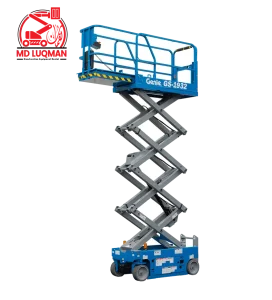
A scissor lift is an aerial work platform that raises a platform vertically using linked support arms. Unlike boom lifts, scissor lifts generally move straight upward and are designed to provide a stable platform for workers and equipment.
They are commonly used for:
- Construction
- Building maintenance
- Electrical work
- Installation
- Warehouses
- Industrial facilities
- Painting
- Indoor maintenance
Scissor lifts are available in different sizes and capacities to suit various working environments.
What Are Lightweight Scissor Lifts?
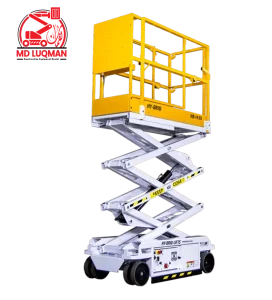
Lightweight scissor lifts are compact and easy to maneuver. Their smaller design makes them suitable for projects where access and floor space are limited.
They are commonly used for:
- Indoor maintenance
- Electrical installation
- Lighting work
- Painting
- Warehouse operations
- Retail facilities
- Office buildings
- Small construction projects
Because of their compact size, lightweight models can often operate in areas where larger equipment would be difficult to use.
What Are Heavy-Duty Scissor Lifts?
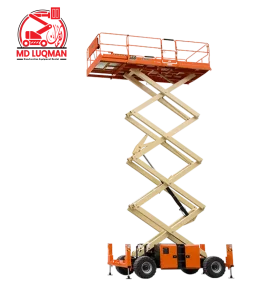
Heavy-duty scissor lifts are designed for demanding construction, industrial, and outdoor applications.
They typically offer:
- Higher platform capacity
- Greater working height
- Larger platforms
- Stronger construction
- More powerful drive systems
Heavy-duty scissor lifts are suitable for projects that require workers to carry heavier tools, equipment, or materials to elevated work areas.
Lightweight vs Heavy-Duty Scissor Lifts: Key Differences
1. Lifting Capacity
The lifting capacity is one of the most important differences.
Lightweight scissor lifts are generally designed for lighter loads, such as workers and basic tools.
Heavy-duty scissor lifts can support greater loads, making them suitable for demanding applications where workers need to carry additional equipment and materials.
Always check the manufacturer’s rated capacity before operating any scissor lift.
2. Working Height
Both lightweight and heavy-duty models are available in different working heights.
However, heavy-duty scissor lifts are often selected for larger projects that require greater elevation and extended working capability.
Before renting equipment, determine the maximum height required for your project.
3. Size and Maneuverability
Lightweight scissor lifts are generally smaller and easier to maneuver through restricted spaces.
They are useful for:
- Narrow indoor areas
- Warehouses
- Retail spaces
- Commercial buildings
Heavy-duty models are larger and may require more space for transportation, setup, and operation.
However, their larger design provides greater capacity and performance for demanding work.
4. Indoor and Outdoor Use
Lightweight scissor lifts are often ideal for indoor projects because of their compact design and maneuverability.
Heavy-duty scissor lifts are commonly used outdoors on construction sites, industrial facilities, and infrastructure projects.
Some heavy-duty models are designed with features that allow them to operate on rougher outdoor surfaces.
The right choice depends on the ground conditions and environment of your project.
Comparison: Lightweight vs Heavy-Duty Scissor Lifts
| Feature | Lightweight Scissor Lifts | Heavy-Duty Scissor Lifts |
|---|---|---|
| Size | Compact | Larger |
| Capacity | Lower | Higher |
| Maneuverability | Excellent in tight spaces | Suitable for larger work areas |
| Typical Use | Indoor maintenance | Construction and industrial work |
| Platform Size | Smaller | Larger |
| Transport | Easier | Requires more planning |
| Terrain | Smooth surfaces | Suitable models for outdoor conditions |
Which Scissor Lift Is Right for Your Project?
The best equipment depends on your specific requirements.
Choose a Lightweight Scissor Lift If You Need:
- Compact equipment
- Indoor access
- Easy maneuverability
- Lower equipment weight
- Access to restricted areas
- Equipment for light maintenance work
Choose a Heavy-Duty Scissor Lift If You Need:
- Greater lifting capacity
- A larger working platform
- Higher working height
- Outdoor construction capability
- Equipment for industrial projects
- Support for heavier tools and materials
Why Rent a Scissor Lift?
Renting a scissor lift can be a practical option for businesses that only need equipment for a specific project.
With Scissor Lift Rental UAE, businesses can access suitable equipment without the costs associated with purchasing, storing, and maintaining a machine.
Benefits of renting include:
- Flexible rental periods
- Lower upfront costs
- Access to different equipment sizes
- Reduced maintenance responsibilities
- Equipment matched to specific projects
Daily, weekly, and monthly rental options can help businesses choose a solution that suits their project schedule.
How to Choose the Right Scissor Lift
Before selecting a scissor lift, consider the following factors:
Working Height
Determine how high the platform needs to reach.
Load Capacity
Calculate the combined weight of workers, tools, and materials.
Platform Size
Consider how much space workers need to complete the job comfortably.
Access Space
Check doorways, gates, pathways, and other restricted areas.
Ground Conditions
Evaluate whether the equipment will operate indoors, outdoors, on smooth surfaces, or on uneven terrain.
Why Choose Luqman Equipment Rental?
Luqman Equipment Rental provides reliable access and lifting equipment for projects across the UAE.
Our equipment rental solutions support:
- Construction Projects
- Industrial Facilities
- Warehouses
- Commercial Buildings
- Maintenance Projects
- Infrastructure Work
- Facility Management
Our team can help you select the right scissor lift based on your required working height, load capacity, platform size, and project conditions.
Final Thoughts
Understanding the difference between lightweight vs heavy-duty scissor lifts is important before choosing equipment for an elevated work project.
Lightweight models are ideal for compact indoor spaces and lighter applications, while heavy-duty scissor lifts are better suited to demanding construction and industrial projects that require greater capacity and performance.
By evaluating your working height, load requirements, access space, and ground conditions, you can choose the right scissor lift for your project.
If you need reliable Scissor Lift Rental UAE, contact Luqman Equipment Rental for professional equipment solutions across the UAE.
FAQs
What is the main difference between lightweight and heavy-duty scissor lifts?
The main differences include lifting capacity, size, platform size, working height, and intended application.
Are lightweight scissor lifts suitable for indoor use?
Yes. Their compact size and maneuverability make them suitable for many indoor maintenance, installation, and construction applications.
When should I use a heavy-duty scissor lift?
Heavy-duty scissor lifts are suitable for demanding construction and industrial projects that require greater platform capacity and working performance.
Can scissor lifts be used outdoors?
Yes. However, the equipment must be suitable for the specific ground and environmental conditions of the worksite.
How do I choose the right scissor lift?
Consider the required working height, load capacity, platform size, access space, and ground conditions before selecting equipment.